Source vintage press studs for garments, accessories, and crafts
Compare 30 listings for vintage press studs from verified Chinese manufacturers. Buyers can evaluate specifications like material, plating, and custom options to find suitable fasteners for apparel and accessories.
Key considerations
Products List


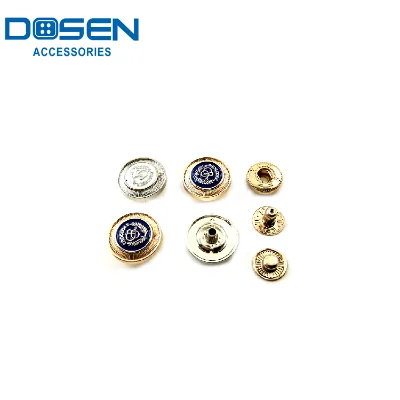


Comprehensive Sourcing Guide
Strategic Sourcing Guide for Vintage Press Studs
The procurement of vintage press studs, often categorized under snap buttons or fasteners in industrial contexts, requires a nuanced approach that balances historical aesthetic requirements with modern manufacturing precision. For buyers in the fashion, upholstery, and hardware sectors, sourcing these components involves navigating a complex landscape of material standards, surface treatments, and supply chain logistics. This guide synthesizes available market data and technical observations to provide a disciplined framework for evaluating suppliers and ensuring product integrity without relying on unverified claims or speculative market figures.
Understanding Technical Specifications and Material Variability
When sourcing vintage press studs, the primary technical differentiator lies in the material composition and the specific model specifications. The market data indicates a diverse range of materials available, including Stainless Steel, Carbon Steel, and SS (Stainless Steel). Buyers must recognize that "vintage" in this context often implies a specific aesthetic finish rather than a single material type. The observed product models range significantly in size, from M3-M100 and 1/8''-4'' to specific threaded rod standards like DIN975 and Double Stud configurations.
The specification "M4--M100" and "M1.4--M100" suggests a broad capacity for custom sizing, which is critical for vintage applications where standard modern fasteners may not match the dimensions of antique garments or furniture. Furthermore, the attribute "Customized" appears frequently, indicating that off-the-shelf solutions may not suffice for authentic vintage reproductions. Buyers should verify the exact thread pitch and diameter against their existing hardware to ensure compatibility. The "Grade A" designation observed in some listings suggests a tier of quality, but without specific metallurgical test data, this should be treated as a supplier claim rather than a guaranteed standard. The "Shape: ROUND" and "Button Type: Snap Button" attributes confirm the basic form factor, but the "Decoration: NO" note implies that some suppliers offer plain versions, while others may require custom plating to achieve the desired vintage look.
Compliance, Certification, and Surface Treatment Standards
Compliance is a critical pillar in B2B procurement, particularly when sourcing components that may be subject to international trade regulations or specific industry standards. The available data highlights several certifications, including ISO, GS, RoHS, and CE. Additionally, a specific reference to "ISO 9001:Forging Tolerance:+/-0.5mm" provides a concrete metric for manufacturing precision, suggesting that some suppliers adhere to strict tolerance levels during the forging process. However, buyers must verify if these certifications apply to the specific vintage line of products, as certifications are often batch-specific.
Surface finishing is equally vital for achieving the "vintage" aesthetic. The observed processes include Gold Plated, Nickel Plated, Zinc Plated, and Passivation. The attribute "Eco-Friendly, Dry Cleaning, Washable, Nickel-Free" is a significant finding, as it addresses modern health and environmental concerns while maintaining the visual appeal of vintage hardware. The "Technics: Plating" attribute confirms that the surface treatment is a key value-add. Buyers should explicitly request documentation regarding the thickness and adhesion of these platings, as vintage finishes often require specific durability characteristics to withstand wear and tear. The "Heat Treatment: Quenching" process noted in the data suggests that some suppliers employ hardening techniques to improve the mechanical strength of the studs, which is essential for high-stress applications.
Cost Drivers and Pricing Structure Analysis
The pricing structure for vintage press studs is influenced by a multitude of factors, including material costs, customization levels, and surface finishing requirements. The observed price range in the market spans from 0 to 99,999 USD, a variance that reflects the difference between bulk commodity items and highly customized, low-volume artisanal pieces. It is crucial for buyers to understand that the lower end of this spectrum likely represents standard, non-customized items, while the higher end encompasses bespoke solutions with complex plating and strict tolerance requirements.
The Minimum Order Quantity (MOQ) is another significant cost driver. The data shows an MOQ range from 1 to 50,000 units, with a specific observation of an MOQ of 1,000 units for certain product lines. This variability allows for flexibility in procurement strategies; buyers seeking small batches for prototyping or niche collections can find suppliers with low MOQs, while large-scale manufacturers may leverage higher volumes to reduce unit costs. The "Sample: Free" attribute is a valuable cost-saving mechanism, allowing buyers to validate quality before committing to a larger order. However, buyers should be aware that while samples may be free, shipping costs and potential tooling fees for custom molds can significantly impact the total cost of acquisition. The "Delivery: 30-45days" lead time also plays a role in cost planning, as longer lead times may necessitate higher inventory holding costs or earlier ordering to prevent stockouts.
Typical Applications and Industry Use Cases
Vintage press studs serve a wide array of applications, ranging from high-end fashion to industrial hardware. The "Application: Hardware" attribute confirms their utility in general mechanical contexts, but the "Button Type: Snap Button" and "Decoration: NO" attributes point strongly toward textile and apparel industries. In the fashion sector, these fasteners are essential for jackets, bags, and children's clothing where durability and ease of use are paramount. The "Eco-Friendly" and "Washable" attributes make them particularly suitable for sustainable fashion lines that require components capable of withstanding repeated laundering without degrading.
In the upholstery and furniture industry, the "M3-M100" size range and "Forging" molding style suggest robustness suitable for heavy-duty applications. The "Processing Object: Metal" and "Molding Style: Forging" indicate that these studs are often integrated into metal frameworks or used as reinforcement points. The "Brand: Hanyang" and "Brand Name: DOSEN" observations suggest that established brands exist in this space, offering a level of trust and consistency. However, buyers should not assume that all products from these brands share the same vintage aesthetic; the "Customized" attribute implies that branding may be secondary to the specific design requirements of the buyer. The "Place of Origin: Fujian, China" and "Handan City" locations highlight the geographic concentration of manufacturing, which can influence logistics and supply chain resilience.
Supplier Evaluation and Geographic Considerations
Evaluating suppliers requires a careful assessment of their capabilities, location, and quality control processes. The data indicates suppliers located in Ningbo, Zhejiang, China, and Handan City, which are known manufacturing hubs. The "Production Origin: Ningbo, China" and "Ningbo. Zhejiang. China" entries suggest a concentration of expertise in this region. Buyers should verify the specific factory capabilities, as the "QC: Self-Check" attribute indicates that some suppliers rely on internal quality assurance rather than third-party audits. This is a risk factor that should be mitigated through rigorous incoming inspection protocols.
The "Packaging" options, ranging from "Carton and Pallet" to "25kg/Carton, Bulking, 36carton/Pallet," provide insight into the supplier's logistical maturity. Standardized packaging ensures that products arrive in good condition, which is critical for vintage items that may be prone to scratching or plating damage. The "We Can Follow Customer's Request" for both packing and standard specifications demonstrates a high degree of flexibility, a trait highly desirable in the vintage market where unique requirements are common. Buyers should prioritize suppliers who can demonstrate a track record of meeting custom requests without compromising on the "Forging Tolerance:+/-0.5mm" standard.
Quality Control and Long-Term Procurement Strategies
Quality control is the linchpin of successful procurement for vintage press studs. The "QC: Self-Check" attribute suggests that while suppliers have internal processes, buyers must supplement this with their own verification. The "Surface Treatment: Passivation" and "Surface Finishing: Gold/Nickel/Zinc Plated" processes require specific testing to ensure corrosion resistance and aesthetic consistency. Buyers should request test reports for salt spray resistance and adhesion tests, especially for items intended for outdoor or high-moisture environments.
Long-term procurement strategies should focus on building relationships with suppliers who offer "Processing & Customization: Yes." This capability ensures that the supply chain can adapt to changing design trends and material availability. The "Standard: Customized" and "Standard: M4--M100" attributes highlight the need for a flexible supply chain that can accommodate varying specifications. Buyers should also consider the "Lead Time: 30-45days" when planning production schedules, ensuring that buffer stock is maintained to mitigate delays. Finally, the "Feature: Eco-Friendly" aspect suggests a growing market demand for sustainable components, making it a strategic advantage to partner with suppliers who prioritize environmentally responsible manufacturing practices.
Summary of Key Sourcing Parameters
To facilitate quick decision-making, the following table summarizes the critical parameters observed in the market data for vintage press studs. This overview helps buyers align their requirements with available supplier capabilities.
| Parameter | Observed Values / Ranges | Sourcing Implication |
|---|---|---|
| Material | Stainless Steel, Carbon Steel, SS | Verify material grade for corrosion resistance. |
| Size/Model | M3-M100, 1/8''-4'', DIN975, Double Stud | Match specific thread pitch and diameter to vintage designs. |
| Surface Finish | Gold, Nickel, Zinc Plated, Passivation | Request plating thickness data for durability. |
| Certification | ISO, GS, RoHS, CE, ISO 9001 | Verify specific certification scope for the product line. |
| MOQ | 1 - 50,000 (Specific: 1,000) | Negotiate based on volume; low MOQs available for samples. |
| Lead Time | 30-45 Days | Plan inventory accordingly to avoid stockouts. |
| Origin | Ningbo, Handan City, Fujian, China | Assess logistics costs and supply chain proximity. |
| Customization | Available (Yes) | Essential for authentic vintage reproduction. |
| Packaging | Carton, Pallet, Bulking | Ensure packaging protects delicate plating. |
By adhering to these evidence-based guidelines, buyers can navigate the complexities of sourcing vintage press studs with confidence, ensuring that the final products meet both aesthetic and functional requirements while maintaining compliance with industry standards.
FAQs
What materials are available for vintage press studs?
Stainless Steel, Carbon Steel, and SS are available materials. Buyers must verify the specific grade and composition to ensure durability matches vintage aesthetic requirements.
Which certifications do these products typically hold?
ISO, GS, RoHS, and CE certifications are observed in the market. Some listings also reference ISO 9001 with specific forging tolerances, but verification per batch is recommended.
Can suppliers customize the surface finishing process?
Yes, customization is available for surface finishing including Gold, Nickel, and Zinc plating. Buyers should request plating thickness data to ensure the finish meets vintage durability standards.
How long is the typical delivery lead time?
The standard delivery lead time ranges from 30 to 45 days. Procurement planning must account for this duration to prevent stockouts in production schedules.
What is the minimum order quantity for these items?
MOQs vary from 1 to 50,000 units, with some lines requiring 1,000 units. Buyers can find low MOQ options for prototyping while larger volumes reduce unit costs.
Where are the manufacturing origins for these fasteners?
Products originate from Handan City, Ningbo, and Fujian in China. Buyers should assess logistics costs and supply chain resilience based on these specific geographic hubs.